
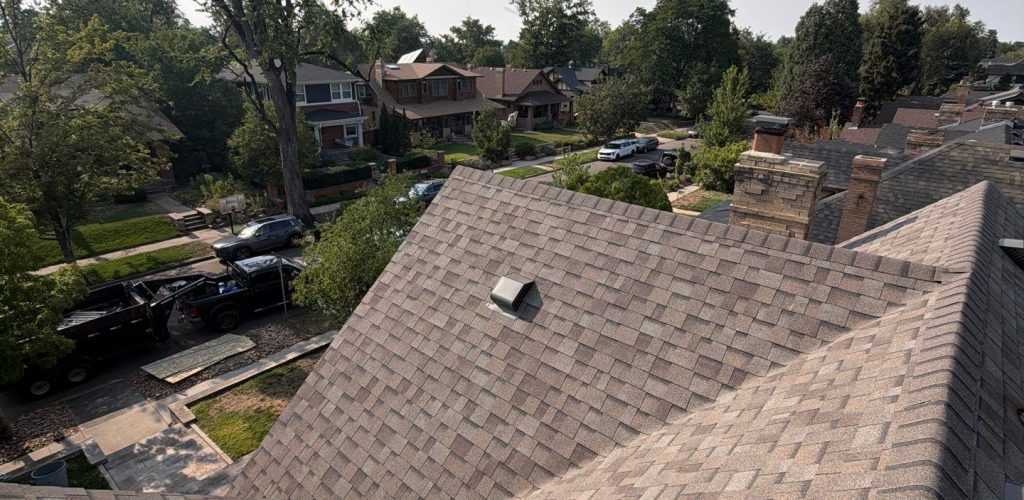

Summer’s intense UV rays, sudden hailstorms, and heat stress put Colorado roofs through a grueling test—one that often leaves behind hidden damage before fall weather ever arrives. Most homeowners don’t think about their roof until a leak appears or a shingle lands in the yard, but waiting that long can turn a small repair into a costly replacement. By learning to spot summer roof damage signs now, you can address problems during ideal repair weather instead of scrambling for emergency service once temperatures drop and storms intensify.
Summer roof damage signs include curled or cracked shingles from heat exposure, granule loss visible in gutters and downspouts, damaged or lifted flashing around chimneys and vents, missing or wind-lifted shingles, ceiling stains or attic moisture indicating leaks, warped or sagging roof sections, clogged or dented gutters, visible daylight through the attic roof deck, and faded or bald patches where protective granules have worn away. These warning signs appear after Colorado’s combination of intense sun, hail, heavy rain, and high winds weakens roofing materials throughout the summer, and catching them before fall prevents emergency repairs during cold, wet weather when problems compound quickly.
TABLE OF CONTENTS
- Common Summer Roof Damage Signs Every Homeowner Should Know
- Interior Warning Signs of Roof Damage After Summer
- Exterior Evidence and Roof System Damage
- When to Inspect and When to Call a Professional
- Protecting Your Home Investment Before Fall Arrives
The sections ahead walk you through exactly what to look for—from granules in your gutters to daylight in your attic—so you can decide whether you need a repair quote or simply a watchful eye as fall approaches.
KEY TAKEAWAYS
- Recognize curled shingles, granule loss, and damaged flashing before minor heat damage becomes a major leak
- Check your attic for stains, dampness, and visible daylight that signal water has already entered your home
- Inspect gutters, yard debris, and roof surfaces after storms to catch problems while repair weather is still ideal
- Know which warning signs require immediate professional evaluation versus routine monitoring
- Address summer damage now to avoid emergency repairs during Colorado’s unpredictable fall and winter weather
Common Summer Roof Damage Signs Every Homeowner Should Know
Summer conditions expose roof vulnerabilities that often go unnoticed until colder weather forces the issue. Colorado’s climate delivers a unique combination of intense sun, sudden storms, and frequent hail exposure that weakens roofing materials over just a few months. Heat causes shingles to expand and contract daily, UV rays break down asphalt binders, and violent thunderstorms test every seal and fastener on your roof. Many roof problems become easiest to spot after summer but before fall and winter weather makes repairs urgent—or impossible.
Warning signs fall into two categories: visible exterior symptoms you can see from the ground or attic, and interior indicators that show damage has already allowed moisture inside your home. Recognizing both types helps you understand that roof damage isn’t only a surface issue. A missing shingle might seem minor, but the water intrusion it allows can saturate insulation, rot decking, and create mold growth long before you see a ceiling stain. Early detection prevents these compounding problems and keeps small repairs from becoming costly emergency replacements during Colorado’s unpredictable fall and winter seasons. Regular summer maintenance and post-season inspections prevent small issues from becoming costly replacements.
Curled, cracked, or blistered shingles from heat exposure
Curled shingle edges often resemble potato chips at the tab corners, lifting away from the roof surface in a way that breaks the waterproof seal. This curling happens when UV rays dry out the asphalt in shingles, causing the material to shrink unevenly and pull upward. Cracks run across shingle surfaces in straight or jagged lines, also caused by UV exposure that makes asphalt brittle over time. Blisters or bubbles form when trapped moisture or thermal stress creates pockets under the shingle surface, and these raised areas often pop or flatten, leaving exposed spots vulnerable to water intrusion.
Homeowners should compare superficial fading—which is mostly cosmetic—against structural deterioration that signals urgent repair needs. Faded color doesn’t compromise a shingle’s function, but curling, cracking, or blistering weakens waterproofing and reduces the roof’s remaining lifespan. Brittle shingles break easily when touched or walked on, so if you notice pieces snapping off during a simple inspection, the entire roof may be nearing the end of its serviceable life. These heat-related symptoms accelerate in Colorado because south- and west-facing roof planes receive the most direct sun exposure throughout long summer days.
Granule loss in gutters and downspouts
Granules appear as sand-like buildup in gutters, downspouts, and around the foundation after summer storms. These “little rocks” protect asphalt shingles from UV rays and provide fire resistance, so their loss signals that the protective layer has worn away. Bald patches or shiny spots on shingles indicate the exposed asphalt layer beneath, which deteriorates rapidly once granules are gone. You’ll see the difference between normal light shedding on older roofs—where a small amount of granule loss happens gradually over years—and unusual heavy accumulation after hail or intense storms that strips granules in large quantities.
Check the ground below roof edges and gutter outlets after summer storms to gauge how much material your roof is losing. A handful of granules might be normal wear, but cupfuls of gritty sediment filling downspout screens or piling near foundation drains suggests accelerated deterioration. Heavy granule loss reduces UV protection and speeds up aging, leaving the asphalt exposed to direct sunlight that breaks down the shingle structure. Colorado’s hailstorms are particularly effective at knocking granules loose, so after any hail event, inspect gutters and yard areas for evidence of impact damage that might not be visible from the ground.
Damaged or lifted flashing around roof penetrations
Inspect flashing around chimneys, vents, skylights, and roof-wall junctions for signs of movement or deterioration. Warning signs include bent, dented, cracked, loose, or pulled-away metal that no longer sits flush against the roof surface or vertical structure. Cracked or missing caulk and sealant around flashing seams also indicate that the waterproof barrier has failed. Flashing protects the most vulnerable seams on your roof, so even minor movement allows major water intrusion behind shingles and into the roof deck.
Shingle damage is easier to spot from the ground, but flashing failures cause most hidden leaks because water travels along metal edges and penetrates where homeowners can’t see it. Check valley flashing—the metal channels where two roof planes meet—for separation, rust, or deterioration that could allow water to flow under shingles instead of down and off the roof. Colorado’s temperature swings cause flashing to expand and contract, loosening fasteners and cracking sealant over time. After a summer of thermal stress and storm exposure, flashing often shows damage before shingles do, making it a critical inspection point before fall weather arrives.
Missing, dislodged, or wind-lifted shingles
Shingles found in your yard or garden beds after storms are an obvious sign of wind damage, but not all wind damage is that visible. Raised, bent backward, or creased shingle tabs indicate that high winds lifted the shingle even if it didn’t tear completely away. A horizontal crease line about one to two inches below the tab above shows that the adhesive seal strip broke and the shingle flapped during high wind, compromising its ability to protect the roof deck. Even attached shingles with this kind of uplift no longer provide a waterproof seal and should be repaired or replaced.
Look for shingle tabs that don’t lay flat or appear lifted at the edges, especially after Colorado’s frequent afternoon thunderstorms and high-wind events. Wind damage often appears in patterns across vulnerable roof planes—typically on corners, edges, and ridge lines where wind speed increases. A single missing shingle might seem like a small issue, but each gap exposes underlayment and roof deck to UV rays and moisture, accelerating deterioration in surrounding shingles. The sooner you address wind-lifted or missing shingles, the less likely you are to face widespread damage that requires partial or full roof replacement.
Interior Warning Signs of Roof Damage After Summer
Interior symptoms often appear after exterior damage has already allowed water into your home. These warning signs indicate that moisture has penetrated the roof assembly and begun affecting insulation, structural components, or living spaces. While exterior inspections focus on preventing problems, interior inspections reveal damage that’s already underway and requires immediate attention to prevent further deterioration. Understanding how water travels inside your home helps you locate the actual source of interior summer roof damage signs.
Ceiling stains, wall stains, and interior leaks
Brown or yellow water stains on ceilings, upper walls, or around chimneys are clear evidence that roof moisture has entered your home. Peeling paint or bubbling drywall texture in upper-level rooms also signals water intrusion, often appearing near corners or along exterior walls where roof edges meet. Fresh, dark stains indicate active leaks, while older, dry stains suggest a resolved issue—but any new staining after summer rain deserves immediate inspection to determine whether the problem is ongoing.
Interior stains are a late-stage symptom, meaning the roof issue may have existed for weeks or even months before you noticed it. Water doesn’t always drip straight down from the leak point; it can travel along rafters, insulation, or pipes before appearing on a ceiling far from the actual roof damage. Check closets and low-traffic rooms where stains go unnoticed longer, and don’t assume a small stain means a small problem. By the time moisture shows up inside your home, the roof deck, insulation, and framing may already be compromised.
Hot attic, poor ventilation, and rising cooling costs
An abnormally hot attic that feels oppressive or causes discomfort when you enter signals poor ventilation or heat-soaked roof conditions. Musty odors or a damp smell when entering the attic space indicate moisture buildup, which can result from both inadequate airflow and roof leaks. Damp or compressed insulation loses its effectiveness, forcing your HVAC system to work harder to maintain comfortable temperatures. Uneven temperatures between rooms on the upper floor can also point to ventilation problems or heat transfer through a damaged roof assembly.
Higher-than-usual summer energy bills can serve as a supporting clue, though they’re not definitive proof of roof damage since HVAC inefficiency or poor insulation can cause the same symptom. Poor airflow in the attic can cause warped decking and accelerate shingle deterioration because trapped heat has nowhere to escape. Colorado’s intense summer sun heats attics to extreme temperatures, and without proper ventilation, that heat radiates into living spaces and stresses roofing materials from below. If your attic feels significantly hotter than previous summers or smells musty, inspect for both ventilation issues and potential roof damage.
Mold, mildew, damp insulation, and musty odors
Visible mold or mildew growth on attic surfaces or rafters indicates prolonged moisture exposure, not just a one-time leak. Damp or discolored insulation that feels wet or compressed has lost its insulating value and may harbor microbial growth. Water trails or staining on the attic floor decking show where moisture has traveled after entering through the roof. A persistent musty smell even when the attic appears dry suggests hidden moisture in insulation or structural cavities where you can’t see it.
Mold is a secondary symptom of a water problem, not the starting point, so finding mold means the roof leak has been active long enough to create conditions for growth. Distinguish between a one-time leak that caused limited dampness and prolonged moisture exposure that requires professional remediation. Long-term dampness causes insulation damage, wood rot, and microbial growth that can spread to living areas and affect indoor air quality. If you see mold or smell mustiness in the attic after summer storms, schedule a professional roof inspection immediately to locate the source and prevent further damage.
Daylight visible in the attic or roof deck
Light penetrating through the roof deck indicates holes or displaced materials that allow both sunlight and water to enter. Check your attic during daylight hours with the lights off, looking carefully around chimneys, vents, and penetration points first since these areas are most vulnerable to separation or damage. Visible daylight means water can enter under the same conditions—if you can see sky, rain can come through the same opening.
This is an immediate repair issue that should not wait until fall. Even pinhole light indicates a compromised roof assembly, whether from a nail that backed out, a separated seam, or a puncture from debris impact. Look for patterns of light along ridge vents, valley seams, and flashing transitions where materials meet. Any visible daylight requires prompt professional evaluation because the opening will only grow larger as wind, rain, and thermal stress continue to work on the damaged area.
Warped, sagging, or uneven roof lines
Roof planes that no longer appear straight or uniform from the street view indicate structural problems beneath the shingles. Visible dips, waves, or sagging sections along the ridgeline suggest warped decking from prolonged thermal stress and moisture, or even compromised framing that can’t support the roof load. Sagging indicates a serious structural issue requiring prompt professional review, not a cosmetic concern you can monitor over time.
Compare slight surface irregularities that reflect normal aging against visible sagging that signals urgent structural damage. Look for uneven shingle lines that follow deck deformation below—if shingle rows curve or dip in a way that mirrors the roof plane beneath, the problem is in the structural layer, not just the shingles. Warped or sagging sections can result from long-term moisture intrusion, inadequate ventilation causing heat damage to decking, or structural settling. Any noticeable change in your roof’s profile requires immediate professional inspection to assess safety and determine whether repair or replacement is necessary.
Exterior Evidence and Roof System Damage
Exterior evidence often provides the most accessible clues to roof damage, since these signs are visible from the ground or during a walk around your property. Checking gutters, yard debris, and roof surface appearance after summer storms helps you catch problems before they cause interior damage. Recognizing hail damage patterns helps you document summer roof damage signs for insurance claims and repair planning.
Gutters that are clogged, overflowing, dented, or sagging
Gutters packed with leaves, twigs, granules, or storm debris prevent proper drainage and can cause water to back up under shingles or overflow onto fascia boards. Overflow marks or water staining on fascia boards indicate that gutters aren’t channeling water away from the roof edge effectively. Dented sections from hail or fallen branches, or gutters sagging and pulling away from the roofline, signal both gutter damage and potential roof damage from the same impact.
Gutter problems both signal roof damage and worsen existing issues by allowing water to pool near vulnerable roof edges. Water backing up under shingles or around fascia creates leak paths that can saturate roof decking and interior walls. Check downspout outlets for granule buildup after rain—heavy accumulation there confirms that your roof is shedding protective material at an accelerated rate. Colorado’s summer storms can fill gutters with debris in a single afternoon, so inspecting and cleaning gutters after major weather events prevents overflow damage and gives you a clear view of how much roofing material is washing off your roof.
Roof debris, fallen branches, and yard evidence of impact
Shingle pieces, nails, or flashing fragments scattered in your yard reveal roof damage that might not be visible from the ground. Fallen limbs or branches resting on the roof surface can puncture shingles, dent metal components, or trap moisture that accelerates deterioration. Leaves, twigs, and debris accumulation in valleys prevents proper water drainage and creates damp areas where moss and algae can grow. Loose metal or bent trim pieces near the foundation indicate that wind or impact has dislodged roofing components.
Property-level evidence reveals roof issues not visible from ground level, making a walk around your home after storms an essential inspection step. Storm debris traps moisture and accelerates deterioration by preventing shingles from drying properly between rain events. Compare clean rooflines with roofs showing scattered material—if your neighbors’ roofs look clear but yours has visible debris, branches, or displaced shingles, your roof likely sustained more damage during the same storm. Collecting and documenting this evidence with photos helps when filing insurance claims or consulting with roofing professionals.
Faded, patchy, or bald-looking shingles
Unevenly colored shingles or sections noticeably lighter than others indicate localized deterioration rather than uniform aging. Bald spots where the granule layer has completely worn away expose the underlying asphalt, which breaks down rapidly under UV exposure. Patchy areas showing exposed asphalt layer appear shinier and smoother than surrounding shingles that still have granule texture. Uniform fading across the entire roof reflects normal aging, but localized deterioration concentrated on certain roof planes signals heat damage or accelerated wear.
One roof plane significantly more faded than others—typically south- or west-facing slopes—shows where UV exposure has been most intense. Shiny or smooth appearance replacing the textured granule surface means the protective layer is gone and the shingle is vulnerable to rapid failure. UV exposure damage concentrated on these slopes is common in Colorado because the high altitude and intense sun deliver more UV radiation than at lower elevations. If you notice bald, patchy, or excessively faded areas, those sections may need replacement even if the rest of the roof appears serviceable.
When to Inspect and When to Call a Professional
Homeowners can safely inspect summer roof damage signs from the ground using binoculars to check for curled shingles, missing tabs, and damaged flashing. Walk your property perimeter after storms, looking for shingle debris, granule accumulation near downspouts, and gutter overflow marks. Check your attic with lights off during daylight hours to spot visible light penetration, inspect insulation for dampness, and look for water stains on rafters or decking. Document findings with photos and notes to track changes over time or support insurance claims.
Call a professional immediately for sagging roof sections, extensive granule loss, multiple missing shingles, visible daylight through the attic, active interior leaks, or mold growth. Steep slopes, multi-story homes, and situations requiring roof access demand professional evaluation for safety reasons. Professionals use moisture meters, infrared cameras, and structural assessment tools to identify hidden damage not visible during ground-level inspections. Understanding the difference between routine and post-storm inspections helps you know when DIY monitoring is sufficient versus when summer roof damage signs require expert diagnosis and immediate repair.
Protecting Your Home Investment Before Fall Arrives
Addressing summer roof damage signs before fall weather arrives prevents emergency repairs during cold, wet conditions when problems compound quickly. Schedule professional inspections after major storm events and before temperature drops make repairs difficult. Minor issues like lifted shingles, small flashing gaps, and isolated granule loss remain manageable repairs in late summer when weather is stable. Delaying until fall or winter means working in challenging conditions, paying premium emergency rates, and risking further damage while waiting for contractor availability.
Document all summer roof damage signs with dated photos showing specific problems like curled shingles, granule accumulation, and ceiling stains. This evidence supports insurance claims and helps contractors provide accurate repair estimates. Clean gutters, remove debris from roof valleys, and trim overhanging branches to prevent additional damage before repairs begin. Regular maintenance extends roof life and reduces the severity of storm damage. Proactive inspection routines catch summer roof damage signs early, protecting your home investment and avoiding costly emergency replacements during Colorado’s unpredictable fall and winter seasons.
Summer roof damage signs give you a clear advantage when caught early—you control the timing, the budget, and the scope of repairs instead of reacting to emergency leaks during Colorado’s unpredictable fall storms. The difference between a straightforward shingle replacement in September and a crisis call in November often comes down to whether you inspect now or wait until water appears on your ceiling. If you’ve spotted curled shingles, granule buildup, ceiling stains, or any of the warning signs covered here, taking action now protects both your home and your budget. Schedule a professional inspection to get an accurate assessment of what your roof needs, or contact us to discuss your specific situation and explore repair options while weather conditions still favor quality workmanship. Your roof worked hard all summer—making sure it’s ready for fall is one of the smartest investments you can make in your home’s long-term protection.
How long can I safely wait to repair summer roof damage before it becomes urgent?
Minor cosmetic damage like light fading can often wait through a full inspection cycle, but functional damage—curled shingles, lifted flashing, missing tabs, or any sign of water intrusion—should be addressed within weeks, not months. Once moisture enters your roof assembly, deterioration accelerates rapidly as insulation becomes saturated, decking begins to rot, and mold establishes itself in hidden cavities. Colorado’s fall weather brings temperature swings, early snow, and freezing conditions that make repairs more difficult and expensive while simultaneously worsening existing damage. If you’re seeing active leaks, visible daylight in the attic, or extensive granule loss, schedule repairs immediately rather than gambling on how long compromised materials will hold up under fall storms.
Can I just replace the damaged shingles, or does the whole roof need attention?
Isolated damage from a fallen branch or localized wind lift often requires only targeted repairs—replacing affected shingles and inspecting surrounding areas for hidden problems. However, widespread symptoms like curling across multiple roof planes, heavy granule loss throughout the gutter system, or pattern damage indicating hail impact usually signal that the entire roof has reached the end of its serviceable life. A professional inspection determines whether you’re dealing with isolated failures or systemic deterioration, helping you avoid the false economy of patching a roof that will need full replacement within a year or two. The age of your roof, the extent of damage, and whether problems appear in concentrated areas or across all exposures all influence whether repair or replacement makes the most financial sense for your specific situation.
Will my homeowner’s insurance cover summer storm damage to my roof?
Most Colorado homeowner policies cover sudden storm damage like hail impact, wind-lifted shingles, and tree damage, but they typically exclude gradual wear, aging, and maintenance-related deterioration. Insurance adjusters distinguish between damage caused by a specific weather event—which is covered—and pre-existing conditions or normal aging—which are not. Documentation matters significantly: dated photos showing damage immediately after a known storm event, records of regular maintenance, and professional inspection reports all strengthen your claim. File claims promptly after storm damage occurs, as waiting months weakens the connection between the weather event and the damage. Understanding your policy’s deductible, coverage limits, and whether you have replacement cost or actual cash value coverage helps you make informed decisions about when to file claims versus paying for repairs out of pocket when damage falls below your deductible threshold.
Citations:
https://trustdale.com/blog/summer-heat-damage-roof
https://integrityhomeexteriors.com/resources/learning-center/how-does-summer-heat-affect-your-roof
https://www.roofreplacementca.com/7-signs-your-roof-needs-immediate-repair-before-summer-ends
https://www.candcfamilyroofing.com/blog/recovering-from-a-summer-storm-signs-you-need-a-roof-repair
https://skroofingandconstruction.com/why-summer-storms-expose-hidden-roofing-problems
https://jacocontracting.com/blog/signs-roof-needs-repair-after-summer-storm
https://www.nationwide.com/lc/resources/home/articles/types-of-roof-damage