
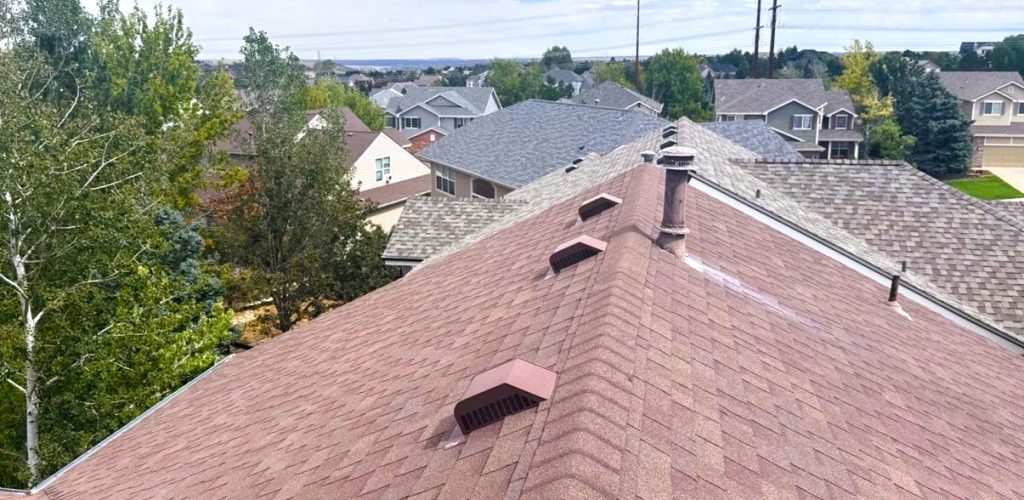

When Colorado’s hail season officially winds down each fall, most homeowners breathe a sigh of relief and assume the danger has passed. Yet the weeks following peak storm activity create a deceptive calm—a quiet period when hidden roof failures remain undetected even as permanent damage has already been done. This window between September and the first hard freeze is when minor impacts from spring and summer storms begin their silent progression toward costly winter failures.
Colorado roof damage after hail season refers to the hidden structural failures that develop during the quiet period following the state’s peak hail activity from mid-April through mid-September. During this deceptive calm, cracked shingles, loosened granules, compromised sealant strips, and soft metal damage remain invisible from the ground yet steadily worsen before winter freeze-thaw cycles accelerate the deterioration. Homeowners who schedule professional inspections in September and October—before leaks appear and before insurance claims become harder to support—protect both their property investment and their ability to document storm-related damage within Colorado’s two-year claims window.
TABLE OF CONTENTS
- Understanding Colorado Hail Season and the Quiet Period That Follows
- Colorado Roof Damage After Hail Season: What Hidden Problems Look Like
- The Post-Hail Inspection Checklist: What to Look For and Document
- Navigating Hail Damage Insurance Claims in Colorado
- Preventing Future Damage and Taking Action Before Winter
KEY TAKEAWAYS
- Colorado’s hail season creates a deceptive calm period when hidden roof damage silently worsens before winter accelerates deterioration
- Cracked shingles, loosened granules, compromised sealant strips, and soft metal damage remain invisible from ground level yet compromise structural integrity
- Professional inspections between September and October allow homeowners to document storm-related damage and protect their two-year insurance claims window
- Understanding how to properly document damage and navigate Colorado insurance requirements protects both your property investment and claim eligibility
- Acting before the first hard freeze prevents minor hail impacts from becoming costly winter failures requiring emergency repairs
The following guide walks you through the specific types of hidden damage that develop during this critical window, shows you exactly what to look for during your post-season inspection, and explains how to protect both your roof and your insurance claim before Colorado’s harsh winter weather transforms minor impacts into emergency repairs.
Understanding Colorado Hail Season and the Quiet Period That Follows
Colorado’s hail season runs from mid-April through mid-September, with peak activity concentrated between May and August when atmospheric conditions create perfect storm development along the Front Range. During these months, homeowners remain vigilant, inspecting properties after each severe weather event and documenting visible damage. Yet when October arrives and storm warnings cease, most property owners assume their roofs either survived intact or show obvious signs of failure—a dangerous misconception that leaves thousands of homes vulnerable.
The quiet period following hail season creates the most hazardous conditions for undetected deterioration. Colorado roof damage after hail season progresses silently as compromised shingles lose protective granules, cracked sealant strips allow moisture penetration, and impact sites weaken structural integrity before winter freeze-thaw cycles accelerate the destruction. Homeowners who understand this critical window between September and the first hard freeze gain a significant advantage in protecting their investment. Recognizing warning signs before the next storm becomes essential during this deceptive calm when hidden failures remain invisible from ground level yet steadily worsen with each temperature fluctuation.
Colorado Roof Damage After Hail Season: What Hidden Problems Look Like
The most dangerous aspect of Colorado roof damage after hail season is its invisibility from ground level. Cracked shingles often show no surface disruption yet harbor internal fractures that allow moisture infiltration, while loosened granules create bare spots that accelerate UV deterioration and reduce fire resistance. Compromised sealant strips—the adhesive bonds that keep shingles attached during wind events—fail gradually after hail impacts, leaving roofs vulnerable to blow-offs during winter storms even though the damage occurred months earlier.
Metal components suffer particularly deceptive damage during hail season. Flashing, vents, and valleys develop soft spots where hail compressed the metal without creating visible dents, weakening water-shedding capabilities that won’t fail until snow accumulation and ice damming apply pressure. Underlayment tears beneath intact shingles create hidden moisture pathways that manifest as interior leaks only after winter precipitation finds these compromised areas. Understanding how water travels inside homes helps homeowners recognize that Colorado roof damage after hail season often appears in locations far from the actual impact site, making professional inspection essential for accurate damage assessment.
The Post-Hail Inspection Checklist: What to Look For and Document
Professional roof inspections between September and October provide the most accurate assessment of Colorado roof damage after hail season. Inspectors examine shingle surfaces for bruising—soft spots that compress under finger pressure indicating granule loss and mat damage—and check sealant strip integrity by gently lifting shingle tabs to verify adhesion. They document granule accumulation in gutters and downspouts, photograph impact patterns on metal components, and use moisture meters to detect hidden water infiltration beneath seemingly intact surfaces.
Proper documentation protects insurance claim eligibility within Colorado’s two-year filing window. Homeowners should photograph all damage from multiple angles, note the date and approximate time of each hailstorm that occurred during the season, and collect neighbor reports of storm severity to establish pattern consistency across the area. Avoiding costly insurance claim mistakes requires thorough documentation before winter weather obscures the connection between storm events and roof failure. Professional inspection reports provide detailed evidence that supports claims even when damage remains invisible to untrained observers, making September and October the critical months for protecting both your roof and your insurance coverage.
Navigating Hail Damage Insurance Claims in Colorado
Colorado homeowners face unique insurance challenges when addressing roof damage after hail season ends. Most policies require documented proof that damage resulted from a covered peril—specifically hail—rather than normal wear or deferred maintenance. Insurers often dispute claims filed months after storm activity, arguing that homeowners should have detected and reported damage immediately. This creates a narrow window where professional inspections conducted in September or October provide the strongest evidence connecting visible deterioration to documented storm dates from the preceding season.
Understanding coverage types significantly impacts claim outcomes for Colorado roof damage after hail season. Actual Cash Value policies depreciate roof age when calculating payouts, potentially leaving homeowners with insufficient funds for complete replacement, while Replacement Cost Value coverage reimburses full replacement expenses regardless of roof age. The hidden reasons claims don’t pay in full often relate to coverage type misunderstandings and inadequate damage documentation. Homeowners should review their policy details before filing claims, photograph all damage comprehensively, obtain professional inspection reports that specifically attribute failures to hail impacts, and maintain records of all storm dates when hail occurred in their area throughout the season.
Preventing Future Damage and Taking Action Before Winter
Proactive measures taken during the post-hail quiet period prevent minor impacts from becoming emergency winter repairs. Homeowners who schedule professional inspections in September and October gain time to complete repairs before the first hard freeze, when roofing work becomes more expensive and weather-dependent. Addressing Colorado roof damage after hail season during this window allows contractors to replace compromised shingles, reseal vulnerable areas, and reinforce metal components before freeze-thaw cycles begin their destructive progression.
Impact-resistant roofing materials provide long-term protection against Colorado’s recurring hail seasons. Class 4 shingles—rated to withstand two-inch hail impacts—significantly reduce future damage risk and often qualify homeowners for insurance premium discounts. Metal roofing systems offer superior hail resistance and longevity, though initial costs exceed traditional asphalt installations. Essential winter roof preparation includes not only addressing existing damage but also implementing preventive strategies that reduce vulnerability during future hail seasons. Homeowners who act decisively during the quiet period following hail season protect their property investment, maintain insurance claim eligibility, and avoid the costly emergency repairs that result when hidden damage progresses unchecked through Colorado’s harsh winter months.
The quiet weeks following Colorado’s hail season represent your most critical opportunity to protect both your property and your financial investment before winter weather transforms hidden damage into emergency repairs. Professional inspection during this narrow window allows you to document storm-related failures within your insurance claim period, complete necessary repairs before freeze-thaw cycles accelerate deterioration, and make informed decisions about long-term protective measures that reduce future vulnerability. The cost of a thorough post-season assessment pales in comparison to the expense of emergency winter repairs or denied insurance claims resulting from inadequate documentation. If your home weathered this year’s hail season, schedule a professional inspection before the first hard freeze to verify your roof’s integrity and secure the evidence needed to support any future claims—because the damage you cannot see from the ground often causes the most expensive problems once winter arrives.
How long do I have to file an insurance claim after discovering hail damage in Colorado?
Colorado law provides a two-year statute of limitations for filing property damage claims from the date damage occurred, not from the date you discovered it. This means if hail struck your roof in June but you didn’t notice the damage until October, your two-year clock started ticking in June. Insurance companies often require prompt notification of potential claims, and delays beyond the post-season inspection window can complicate your ability to prove the damage resulted from a specific storm rather than gradual deterioration. Scheduling your professional inspection in September or October creates documentation that connects visible damage to specific storm dates, strengthening your claim even if you choose to file later within the two-year window.
Can small hail that doesn’t leave visible dents still damage my roof enough to cause leaks?
Colorado law provides a two-year statute of limitations for filing property damage claims from the date damage occurred, not from the date you discovered it. This means if hail struck your roof in June but you didn’t notice the damage until October, your two-year clock started ticking in June. Insurance companies often require prompt notification of potential claims, and delays beyond the post-season inspection window can complicate your ability to prove the damage resulted from a specific storm rather than gradual deterioration. Scheduling your professional inspection in September or October creates documentation that connects visible damage to specific storm dates, strengthening your claim even if you choose to file later within the two-year window.
Should I repair just the damaged sections or replace the entire roof after hail season?
The answer depends on the extent and pattern of damage across your roof, your insurance coverage type, and the age of your existing roofing system. If hail damage affects more than 30-40% of a roof plane, most insurance companies and building codes require complete replacement of that section to maintain uniform appearance and weather resistance. Spot repairs on roofs older than 15 years often prove false economy because newer shingles won’t match aged materials in color or performance, and you’ll likely face additional hail damage in future seasons requiring full replacement anyway. A qualified contractor can assess whether strategic repairs will adequately protect your home through the next several years or whether comprehensive replacement provides better long-term value, particularly when insurance coverage can offset the cost of addressing widespread but subtle damage that occurred during this season’s storms.
Citations:
https://www.coloradoroofing.org/consumer/hailstorms-and-your-roof
https://www.myhailscore.com/hail-damage
https://www.onpointcontractingusa.com/blog/hail-damage-in-colorado
https://redhawkroofing.com/colorado-hail-season-guide
https://www.myhailscore.com/blog/colorado-hail-damage-statistics-decade
https://metrocityroofing.com/blog/everything-you-need-to-know-about-hail-in-colorado
https://www.gatesroof.com/blog/colorado-hail-season-2026-homeowners-guide
https://coloradoroofauthority.com/hail-damage-roofing-colorado
https://www.myhailscore.com/colorado-hail-statistics
https://willowhome.co/home-maintenance-boulder/colorado-hail-season